
Why Skin Can Feel Oily and Dry at the Same Time — And What to Do About It
Why Skin Can Feel Oily and Dry at the Same Time — And What to Do About It
 Skin Education · Combination Skin Guide
Shiny and dry at the same time is not a contradiction — it is a dehydration problem, not an oil problem. Stripping away oil usually makes both sides of the equation worse.
Tight cheeks, shiny T-zone. Flaky patches alongside visible pores. A feeling that no single product seems to work across your whole face. If this sounds familiar, you are not imagining it — and you are certainly not alone.
This pattern can show up at different points in life and for a variety of reasons. Understanding what is actually happening in the skin makes it much simpler to address — and stops you reaching for products that accidentally make things worse.
The fundamentals
Dry vs dehydrated — these are not the same thing
This is the most important distinction in understanding combination skin behaviour. Most people use the words interchangeably, but they describe completely different things — with different causes and different solutions.
- ■The skin produces less sebum (oil) than average
- ■A structural characteristic, not a temporary condition
- ■Feels rough, tight, and sometimes flaky consistently
- ■Pores appear small or barely visible
- ■Responds to lipid-rich, occlusive moisturisers
- ■Does not change significantly based on routine
- ■The skin lacks water, not oil — can happen to any skin type
- ■Temporary, caused by environment, routine, or lifestyle
- ■Feels tight in some areas, oily in others
- ■Fine lines appear more pronounced when skin is pressed
- ■Responds to water-binding humectants, not just oils
- ■Can improve significantly with the right routine
“Oily skin can be dehydrated. Dry skin can be dehydrated. Dehydration is about water content, not oil production — which is why treating it with more stripping only makes both sides worse.”
What is actually happening
Why the skin produces more oil when it is short on water
When the skin loses water faster than it can retain it — through environmental exposure, over-cleansing, or a disrupted barrier — it triggers a compensatory response. The sebaceous glands produce more oil in an attempt to slow down moisture loss. The result is a surface that feels shiny or greasy, sitting on top of skin that is still thirsty.
This explains why the two sensations can co-exist — and why addressing the oil is rarely the right move. Reducing oil production without restoring hydration usually worsens the cycle.
Water and oil are different things
Sebum (oil) is produced by glands beneath the skin. Moisture (water) is held within the skin’s cells and between them. A product can add oil without adding hydration — and the skin can overproduce oil while being significantly under-hydrated at the same time.
The barrier holds water in
When the skin barrier is functioning well, it slows the rate at which water evaporates from the skin’s surface. A disrupted barrier loses water faster — which is why barrier health and hydration are closely linked, and why products alone cannot solve dehydration if the barrier is damaged.
Stripping oil triggers more oil
Cleansers, toners, and treatments that strip sebum aggressively signal to the skin that its protective layer has been removed. The response is to produce more. Over time, over-stripping skin leads to more shininess, not less — alongside continuing tightness and dryness in areas with fewer oil glands.
Different zones, different needs
The T-zone has a higher concentration of sebaceous glands than the cheeks and eye area. This means oil production, pore size, and skin behaviour can vary significantly across the face — which is why a single product does not always address every zone equally well.
What makes it worse
Routine mistakes that worsen both sides
These are the routine habits that make the greasy-and-dry pattern more pronounced, not less.
Using a foaming or stripping cleanser twice a day
Strong foaming cleansers remove sebum effectively — but they also remove the skin’s natural lipids. Used twice daily on already-dehydrated skin, they worsen both the dryness and the compensatory oil production.
Fix: a cream or hydrating cleanser, especially in the morning.Skipping moisturiser on oily areas
Applying moisturiser only to dry patches and avoiding the T-zone leaves already-dehydrated skin without the hydration it is signalling for — which perpetuates the overproduction cycle.
Fix: a lightweight, oil-free moisturiser applied everywhere, not just dry patches.Over-exfoliating to manage shine
Acids and physical exfoliants used too frequently remove the protective surface of the skin alongside dead cells. On dehydrated skin, this accelerates water loss and barrier disruption significantly.
Fix: reduce exfoliation to once or twice a week and prioritise hydration first.Using a heavy rich cream on the whole face
A thick, occlusive cream on an already oily T-zone can block pores and worsen congestion — while still not providing the water-binding hydration that dehydrated skin actually needs.
Fix: a humectant-first serum layered under a lighter moisturiser suited to combination skin.Treating the whole face as one skin type
One product does not fit every zone. Applying the same cleanser, treatment, and moisturiser uniformly across the face ignores the structural differences between the T-zone and the rest of the face.
Fix: adapt the routine by zone where needed, particularly the cleanse and hydration steps.Reaching for mattifying products on top of dehydration
Mattifying products manage the appearance of shine on the surface, but do not address the underlying cause. Used without a hydration base, they sit on top of dehydrated skin without improving its condition.
Fix: hydrate first, then mattify if needed — not instead of hydrating.How to approach it
What actually helps skin that is tight and shiny
The goal is not to choose between dry and oily — it is to restore water content across the whole face, which brings both sensations closer to balance. The routine below does exactly that.
A hydrating cream cleanser removes debris and excess oil without stripping the barrier or the skin’s natural moisture. This is the single most impactful change for skin that is simultaneously tight and shiny. In the morning, a light rinse may be sufficient if no SPF or makeup was worn overnight.
Avoid hot water. Cool to lukewarm temperature reduces barrier disruption significantly.
Humectants — hyaluronic acid being the most well-known — draw water into the skin from the environment and from deeper layers. Applied on slightly damp skin before moisturiser, they significantly increase water retention across all zones, including the T-zone. This is the step that addresses dehydration directly.
Apply within 60 seconds of cleansing, while skin is still slightly damp.
A lightweight, non-comedogenic moisturiser applied over the humectant seals in water and supports the barrier without adding oil to already-oily zones. Daily SPF in the morning is essential — UV exposure degrades barrier lipids, worsening water loss and the dehydration pattern over time.
An oil-free formula applied everywhere — including the T-zone — is more effective than a rich cream applied only to dry patches.
How we approach tight cheeks and a shiny T-zone
We address the cleanser first. A foaming or gel cleanser is almost always the starting point of the problem. Switching to a hydrating cream formula is usually the fastest visible change.
We add a humectant serum before moisturiser. Hyaluronic acid on damp skin, applied consistently morning and evening, addresses the underlying dehydration within two to four weeks in most cases.
We replace heavy or pore-blocking moisturisers with a lightweight, oil-free formula. Applied everywhere — not just dry patches — this gives every zone what it needs without adding congestion to areas that already produce enough oil.
We pause exfoliating actives temporarily. If the skin is showing the tight-and-shiny pattern, we prioritise restoring hydration and barrier function before reintroducing any acids or retinoids. A two-week break usually helps clarify whether the routine or the skin is the variable.
We apply SPF every morning. Without exception. UV exposure directly disrupts the moisture barrier. SPF is part of the hydration protocol, not just sun protection.
Hydrate first. Mattify second if needed. Never strip skin that is already short on water.
Skincare bundle
The balance routine — tight cheeks and shiny T-zone
Three products that address the combination pattern directly: a hydrating cleanse that does not strip, a water-binding serum that delivers hydration to every zone, and a lightweight moisture-and-SPF finish that supports balance without adding oil.
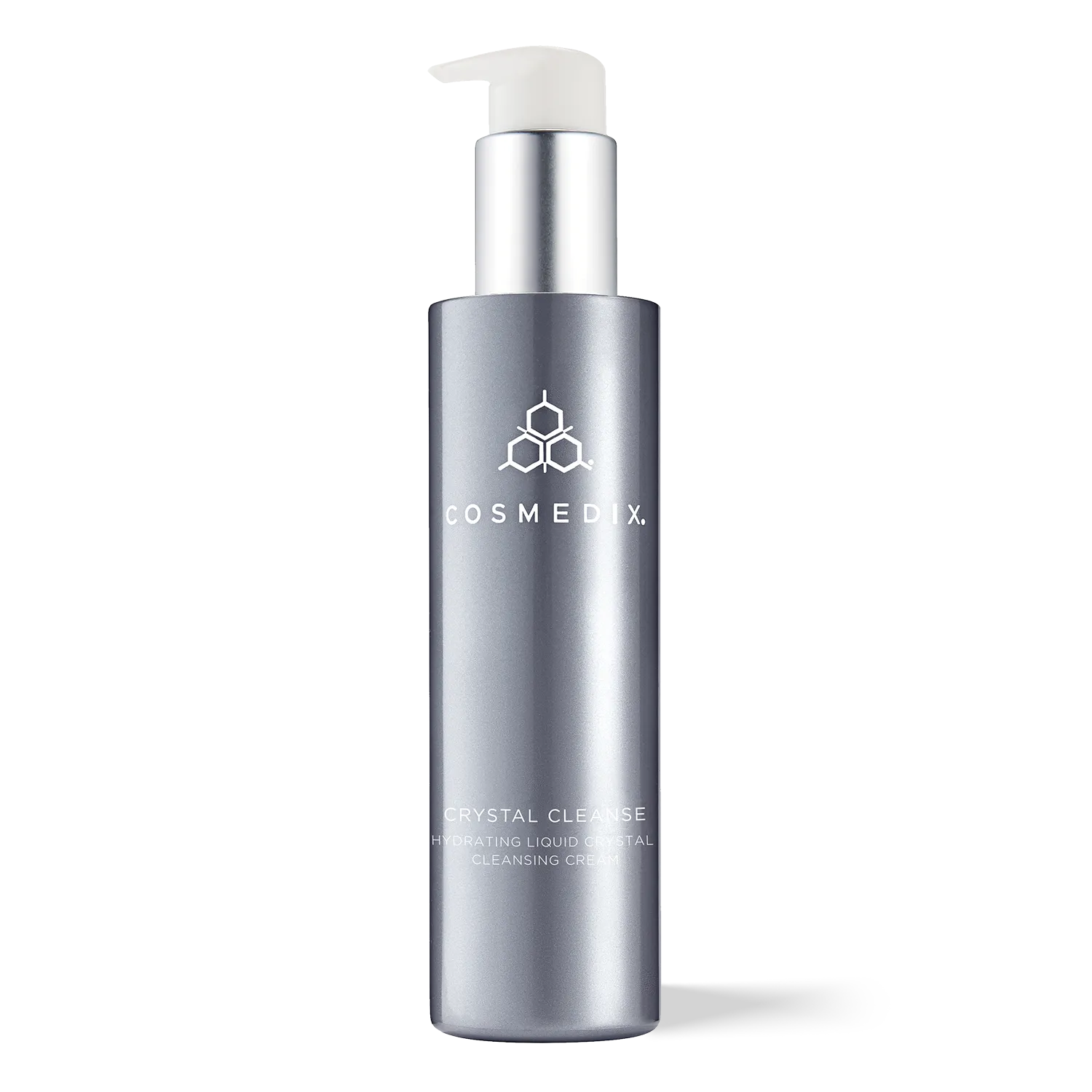
Crystal Cleanse Hydrating Liquid Crystal Cleansing Cream 160ml
A rich cream cleanser that washes away dirt, oil, and debris without stripping the skin of hydration. The Liquid Crystal Technology locks in nourishing ingredients whilst cleansing, leaving the skin’s moisture barrier intact. Coconut Oil and Prickly Pear Extract soften the appearance of skin and reduce the look of a dry or dull complexion. Suitable for all skin types — including those experiencing the tight-and-shiny combination pattern.
- Liquid Crystal Tech
- Non-stripping
- Cream formula
- All skin types
- £50.00
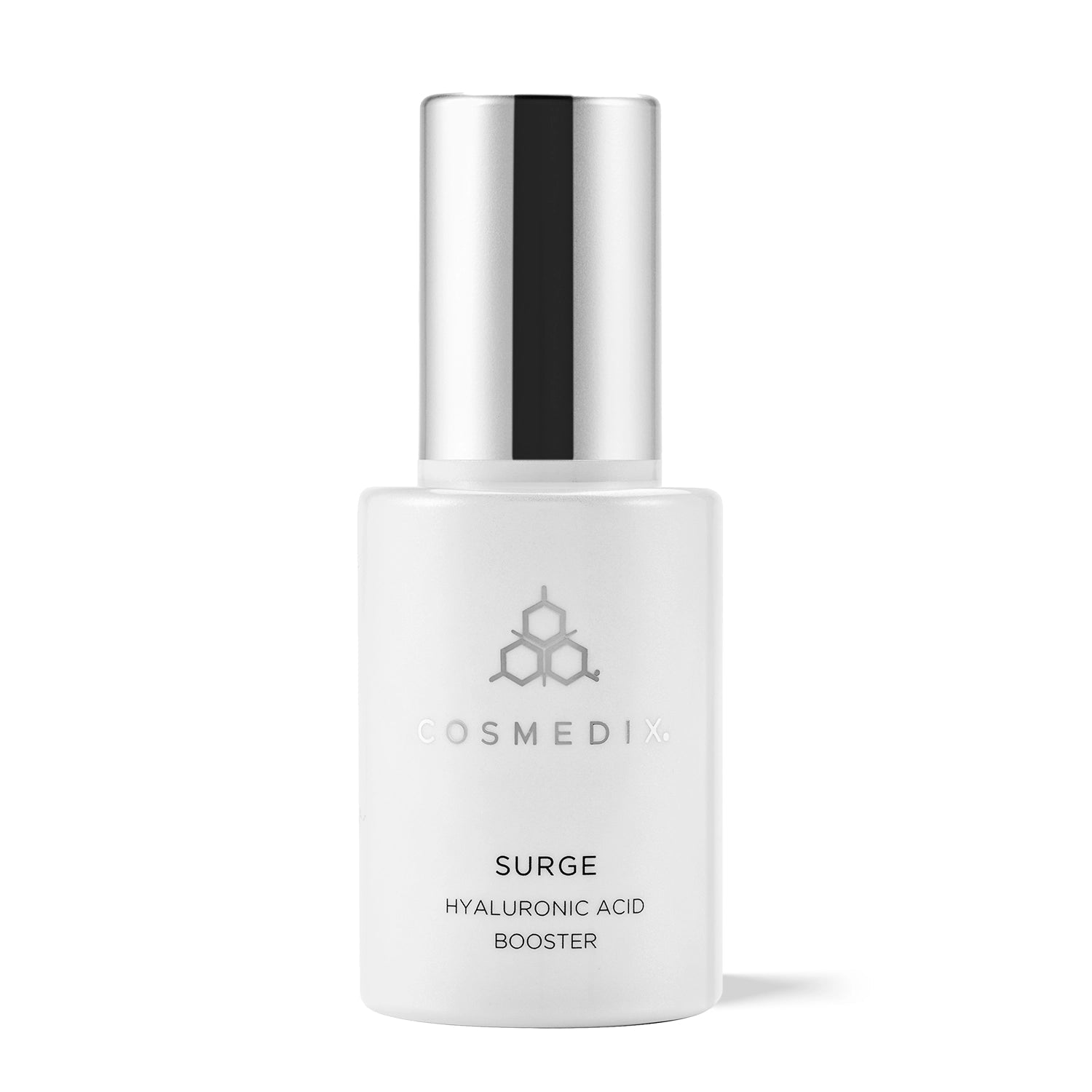
Surge Hyaluronic Acid Serum & Booster 30ml
A deeply hydrating hyaluronic acid serum and booster that draws moisture into the skin and locks it in throughout the day. Lightweight enough for oily areas — effective enough to address the water deficit that causes tight patches. Applied on damp skin before moisturiser, it delivers targeted hydration across the whole face without adding oil or congestion to the T-zone.
- Hyaluronic acid
- Humectant
- Oil-free
- All zones
- £53.00
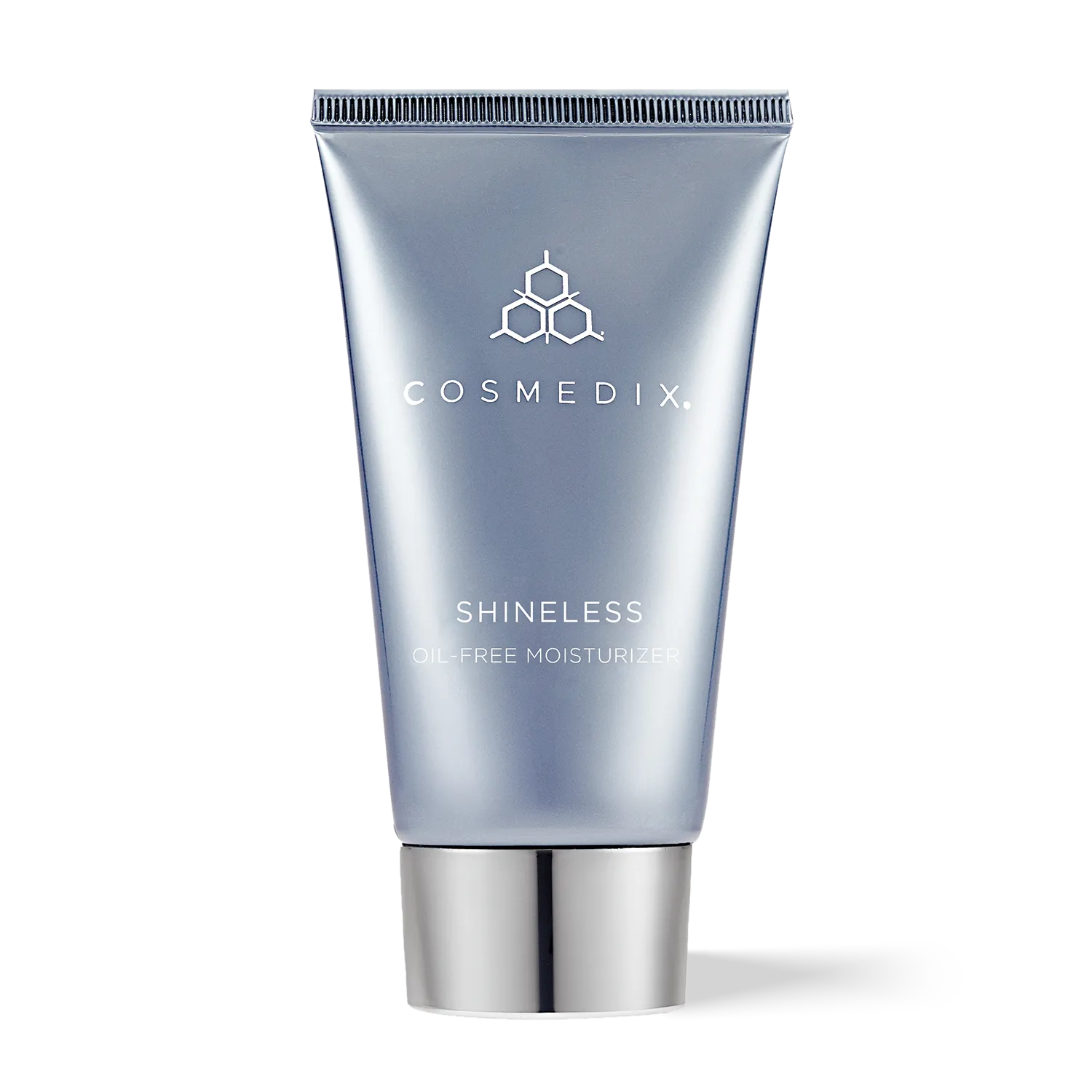
Shineless Oil-Free Moisturiser 60g
An oil-free moisturiser that hydrates the skin whilst reducing the appearance of excess sebum for long-lasting matte results. Seals in the hydration delivered by the Surge serum without adding oil to zones that already produce enough. Lightweight enough to use across the whole face — including the T-zone — without clogging or congestion. The ideal balance step for a combination pattern.
- Oil-free
- Mattifying
- Sebum control
- Whole face
- £55.00
Balance my skin
If your skin is tight in some places and shiny in others, the answer is not more stripping — it is smarter hydration. The Crystal Cleanse + Surge + Shineless bundle is built for exactly this. Our team can help you build the right routine for your skin if you are not sure where to start.
Balance my skin →
Leave a comment