Purging vs Irritation: Why Your Skin Gets Worse Before It Gets Better — And When It Shouldn’t
Purging vs Irritation: Why Your Skin Gets Worse Before It Gets Better (And When It Shouldn’t)

Purging is predictable and temporary. Irritation is a warning sign. Knowing the difference stops you from abandoning a routine that's working — or continuing one that's causing harm.
✨ Buy any Vitamin A, retinoid or retinoid alternative → unlock barrier support add-onsStarting a retinoid or vitamin A product is one of the most worthwhile things you can do for your skin. It's also one of the most commonly abandoned steps — not because the product stopped working, but because people do not know what to expect in the first few weeks.
Skin getting temporarily worse is normal. But how it gets worse, where, and for how long tells you whether to hold the course or make a change. This guide explains exactly how to tell the difference.
The fundamentals
Purging vs irritation — explained clearly
These two things feel similar but are caused by entirely different mechanisms. Getting this distinction right changes how you manage your skin while using actives.
- ✓Appears where you normally break out
- ✓Starts within 2–4 weeks of introducing a new active
- ✓Spots cycle through faster than usual
- ✓No burning, stinging, or peeling around spots
- ✓Settles within 4–6 weeks
- ✓Skin improves noticeably after the purge clears
- ✗Appears in new areas where you don’t normally break out
- ✗Burning, stinging, or soreness on application
- ✗Persistent redness, flaking, or tightness
- ✗Skin feels worse, not just temporarily different
- ✗Does not improve after 6–8 weeks
- ✗Worsens with each application
“Purging is your skin clearing a backlog. Irritation is your skin telling you something is wrong. One needs patience. The other needs action.”
What is actually happening
Your skin getting worse is not always purging
Purging happens because retinoids and exfoliating actives accelerate cellular turnover. Skin that was congested underneath gets pushed to the surface faster than usual. This looks like a breakout, but it is actually the skin clearing.
Products that can cause purging: retinoids, retinol, AHAs, BHAs, Vitamin C, benzoyl peroxide. Products that cannot cause purging include moisturisers, SPF, cleansers, and most toners — if your skin reacts to those, it is irritation, not purging.
Location is the most reliable indicator. Purging appears where you typically break out. Breakouts in new locations — cheeks, forehead, temples — are more likely irritation or a reaction.
What to expect
How long should purging last?
Purging follows a fairly predictable timeline. If your skin does not follow this pattern, it's worth reassessing whether what you are experiencing is purging at all.
1–2
Initial acceleration
Congestion that was sitting beneath the surface begins moving up. You may notice more spots than usual, or existing ones cycling through more quickly.
Normal and expected. Continue using the product as directed.
2–4
Peak purge
The most active phase. This is when most people consider stopping — but this is usually the moment just before things improve. Hold the course if there is no stinging or burning.
Focus on barrier support: a gentle moisturiser and daily SPF.
4–6
Settling period
Breakouts reduce in frequency and severity. Skin begins to look clearer and more even. Texture and tone start to visibly improve for the first time.
This is when the product begins to show its real results.
8+
Established results
By week eight, a true purge should have resolved. If breakouts are still worsening at this stage, the product may not be right for your skin type or you may need to reduce frequency.
Still struggling at 8 weeks? Contact us for a routine review.
When to stop
3 signs you should slow down
These are not signs to abandon a product permanently — but they are signs to pause, reduce frequency, and give the barrier time to recover before continuing.
Burning or stinging on application
A brief tingle can be normal with some acids. Burning that lasts more than 30 seconds, or stinging that gets worse with each use, is the barrier telling you it is overwhelmed. Stop and repair before re-introducing.
Persistent redness or flaking between uses
Some dryness around the mouth or nose in the first two weeks of retinoid use is expected. Redness and flaking that does not resolve between applications, or that spreads beyond these areas, indicates barrier compromise.
Skin feels permanently tight or dry
Retinoids can temporarily reduce ceramide production. If your skin feels tight, uncomfortable, or reactive all day — not just after application — reduce frequency to once or twice a week and prioritise barrier repair until skin stabilises.
Supporting skin through actives
Barrier add-ons that prevent irritation
The single biggest reason retinoid routines fail is a missing barrier step. These additions do not interfere with your active — they make it more tolerable and allow you to use it more consistently, which is where results come from.
Our retinol-user barrier support routine
Cleanse gently. No exfoliating cleanser on retinoid mornings. A gentle or milky cleanser protects what the retinoid was building overnight.
Hyaluronic acid or antioxidant serum. Replaces morning moisture and adds antioxidant support before SPF.
Lightweight moisturiser then SPF. Always. Every morning. Without exception.
Double cleanse if wearing SPF or makeup. Clean skin allows the retinoid to absorb properly rather than sitting on residue.
Wait 5 minutes after cleansing. Damp skin increases retinoid absorption, which also increases irritation risk. Dry skin absorbs more gently.
Optional: thin layer of moisturiser before retinoid if skin is reactive or you are a beginner. Then apply retinoid. Then seal with a richer moisturiser on top.
If stinging persists beyond 30 seconds, if new breakouts appear in areas where you never break out, or if your skin feels significantly worse after 8 weeks — stop the product and let your barrier recover for two to three weeks before trying again at lower frequency.
Featured products
Choose your Vitamin A entry point
All three are encapsulated formulations designed to minimise irritation whilst delivering real results. Your starting point depends on your skin’s current tolerance and experience with actives.
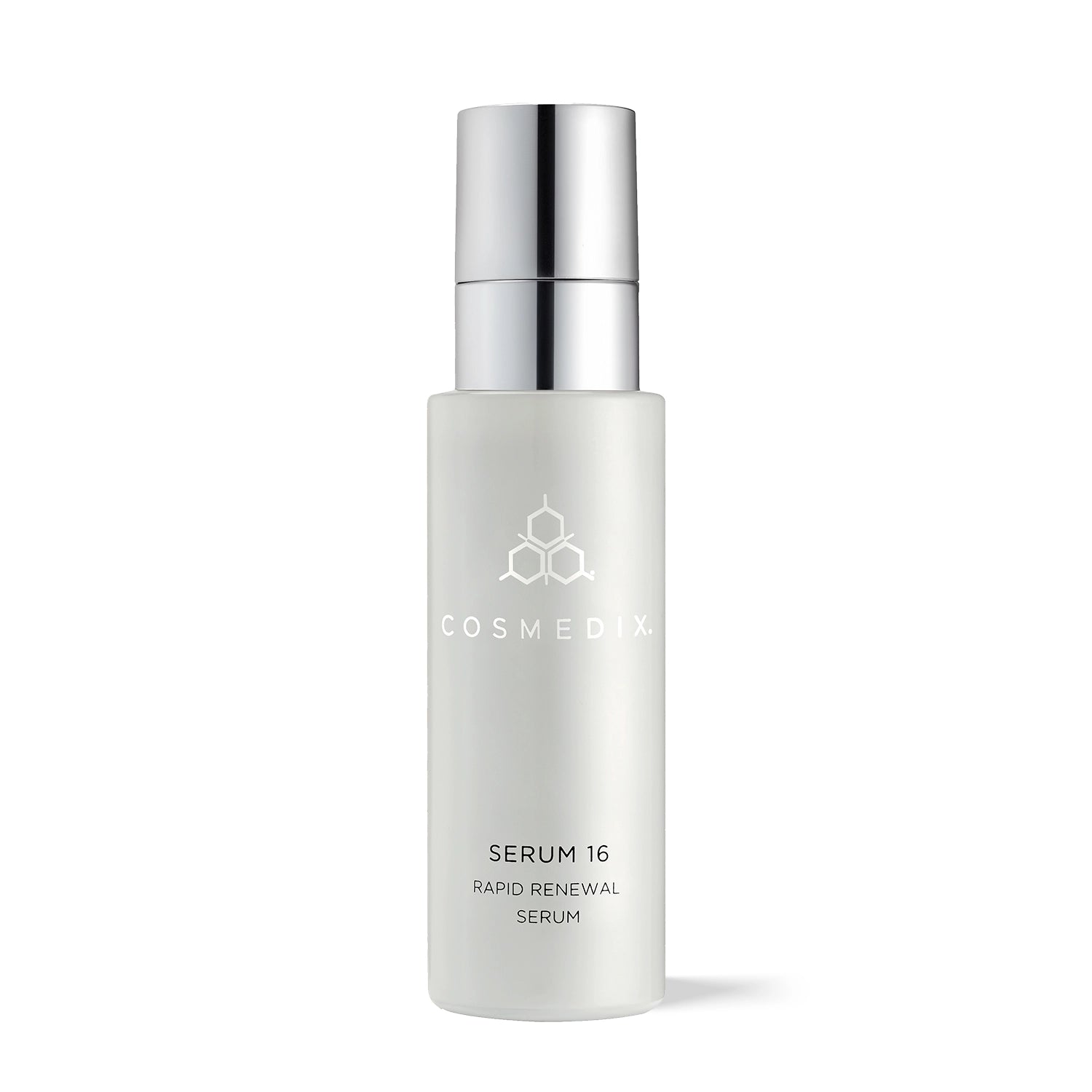
Serum 16 Retinol Complex 30ml
The closest thing to prescription-strength age defiance without a prescription. Contains 16% LG-Retinex complex — a proprietary blend of Retinol, Retinaldehyde, and Glycosaminoglycans. Encapsulated for tolerability and proven in a six-week clinical study to visibly reduce sun damage, age spots, and deep lines. The ideal starting point for anyone new to retinoids.
- 16% LG-Retinex
- Encapsulated retinol
- Beginner-friendly
- £96.00
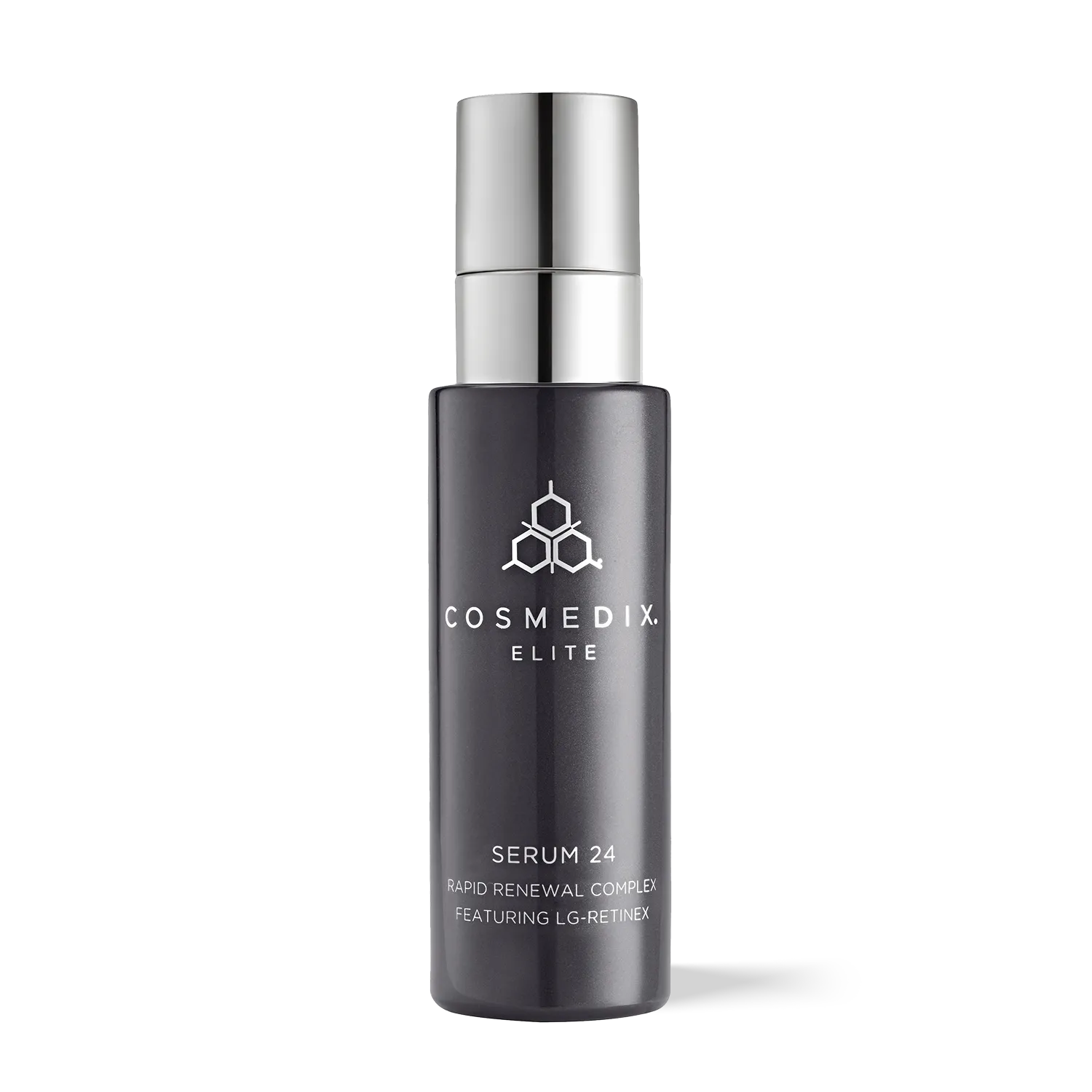
Serum 24 30ml
The advanced step up from Serum 16, containing 24% LG-Retinex complex, including Retinol and Retinaldehyde. Retinaldehyde converts to retinoic acid more efficiently than retinol, delivering faster visible results with a gentle encapsulated delivery system. After 8 weeks, 91% of clinical study participants reported less visible fine lines and wrinkles. For those who have established retinoid tolerance.
- 24% LG-Retinex
- Retinal + Retinol
- Established users
- £115.00
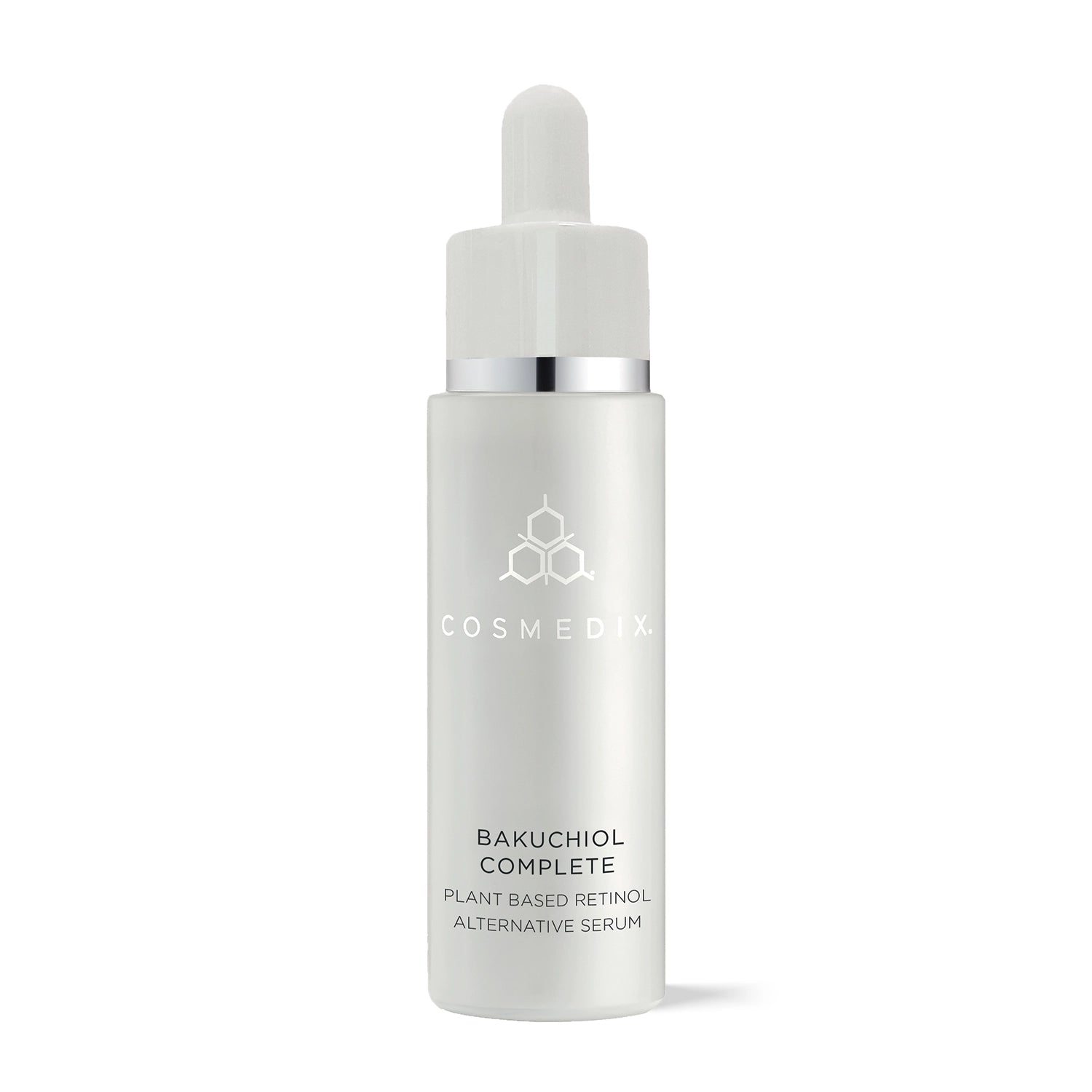
Bakuchiol Complete Plant-Based Serum (0.5%) 30ml
A powerful plant-based serum delivering all the benefits of a Vitamin A derivative without the harsh side effects of dry, red, or flaky skin. 0.5% Bakuchiol brightens and visibly improves skin tone and clarity. Deeply hydrating Squalane, Jojoba, and Moringa Seed Oil nourish and restore balance. The ideal entry point for sensitive, reactive, or pregnancy-affected skin that still wants active results.
- 0.5% Bakuchiol
- Retinol-free
- Sensitive-safe
- £86.00
Buy any Vitamin A or retinoid alternative → unlock barrier support add-ons
Start your retinoid journey with the right support in place. All tiers applied automatically at checkout whilst stocks last.
Leave a comment